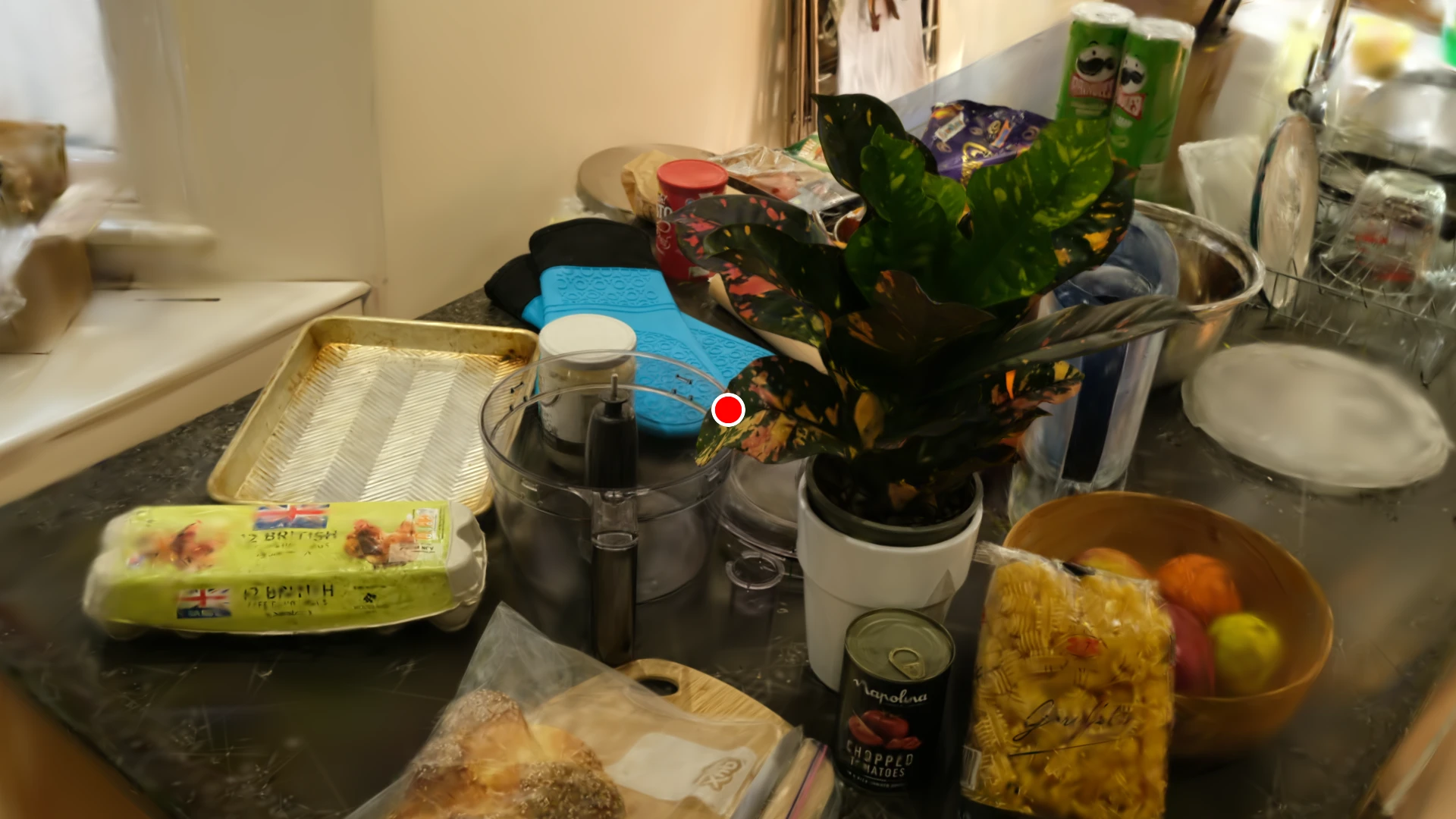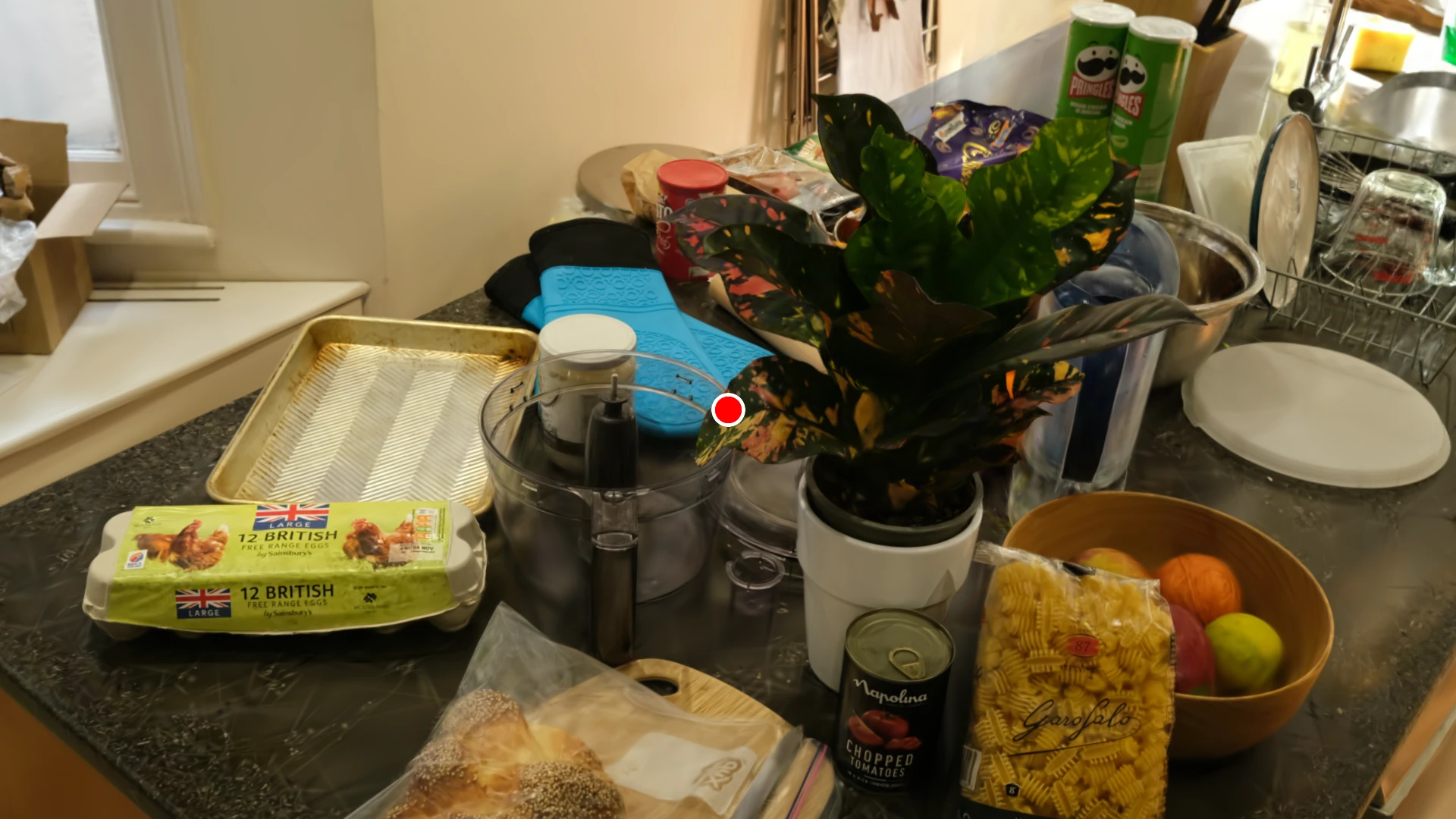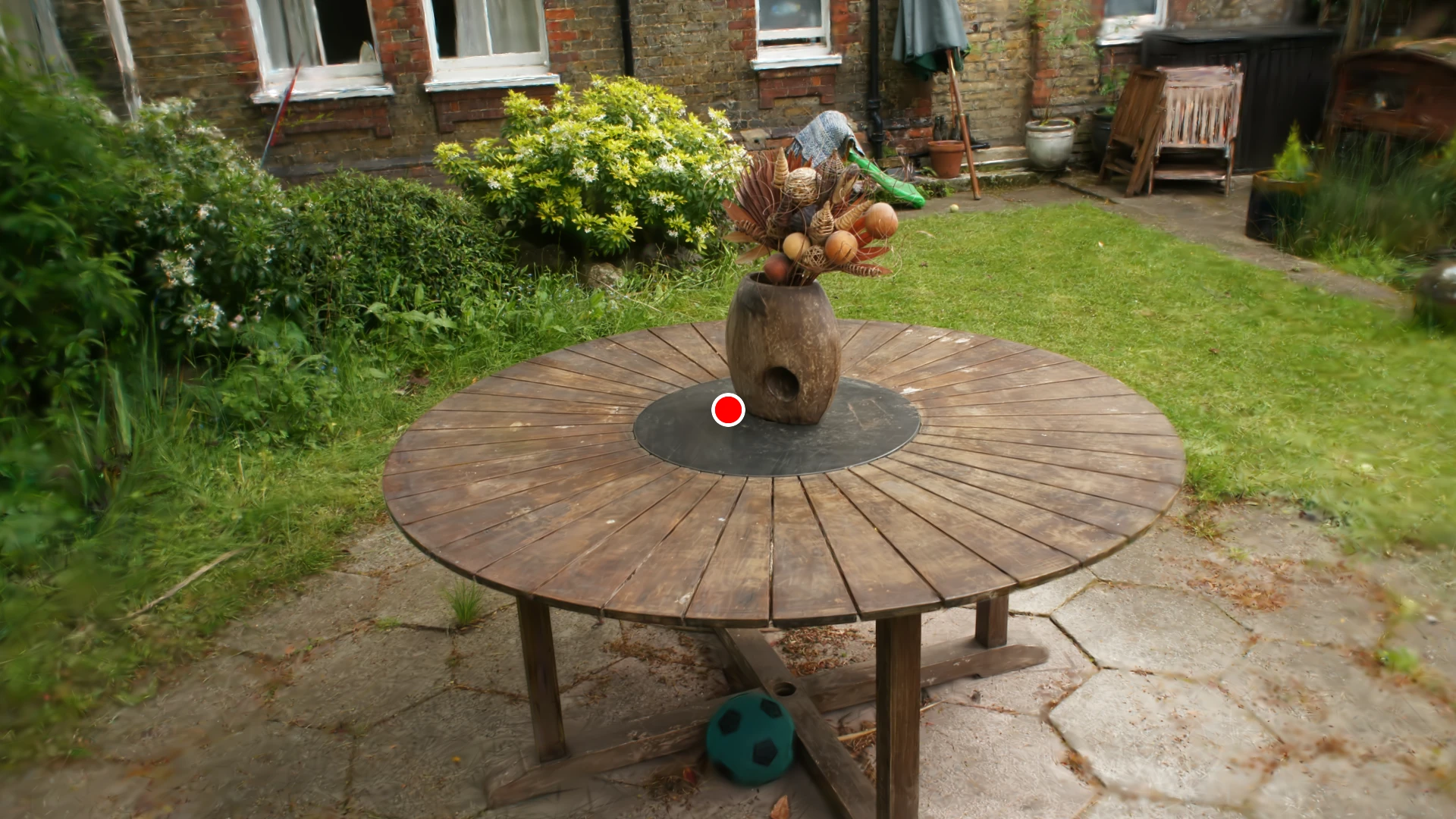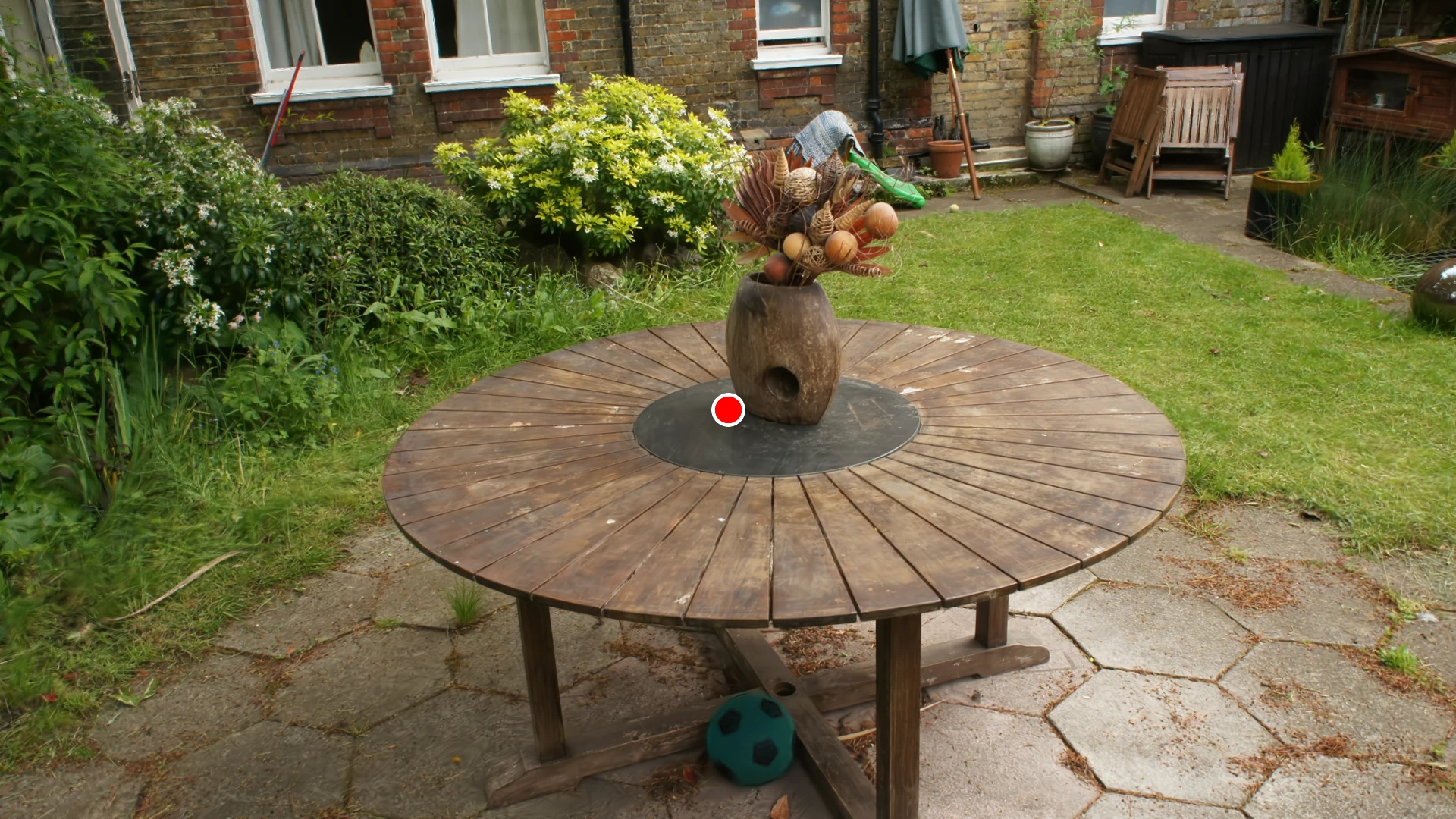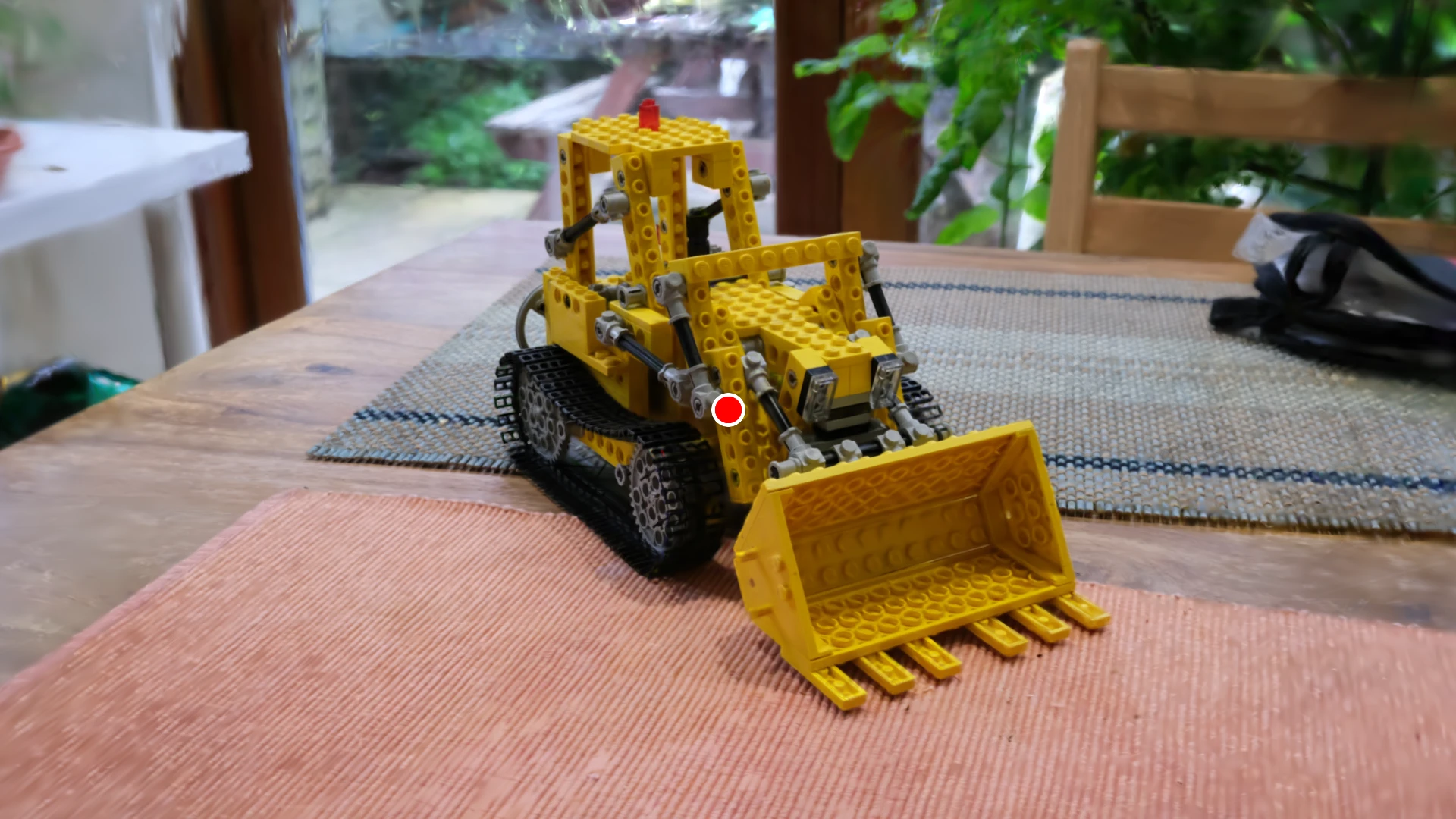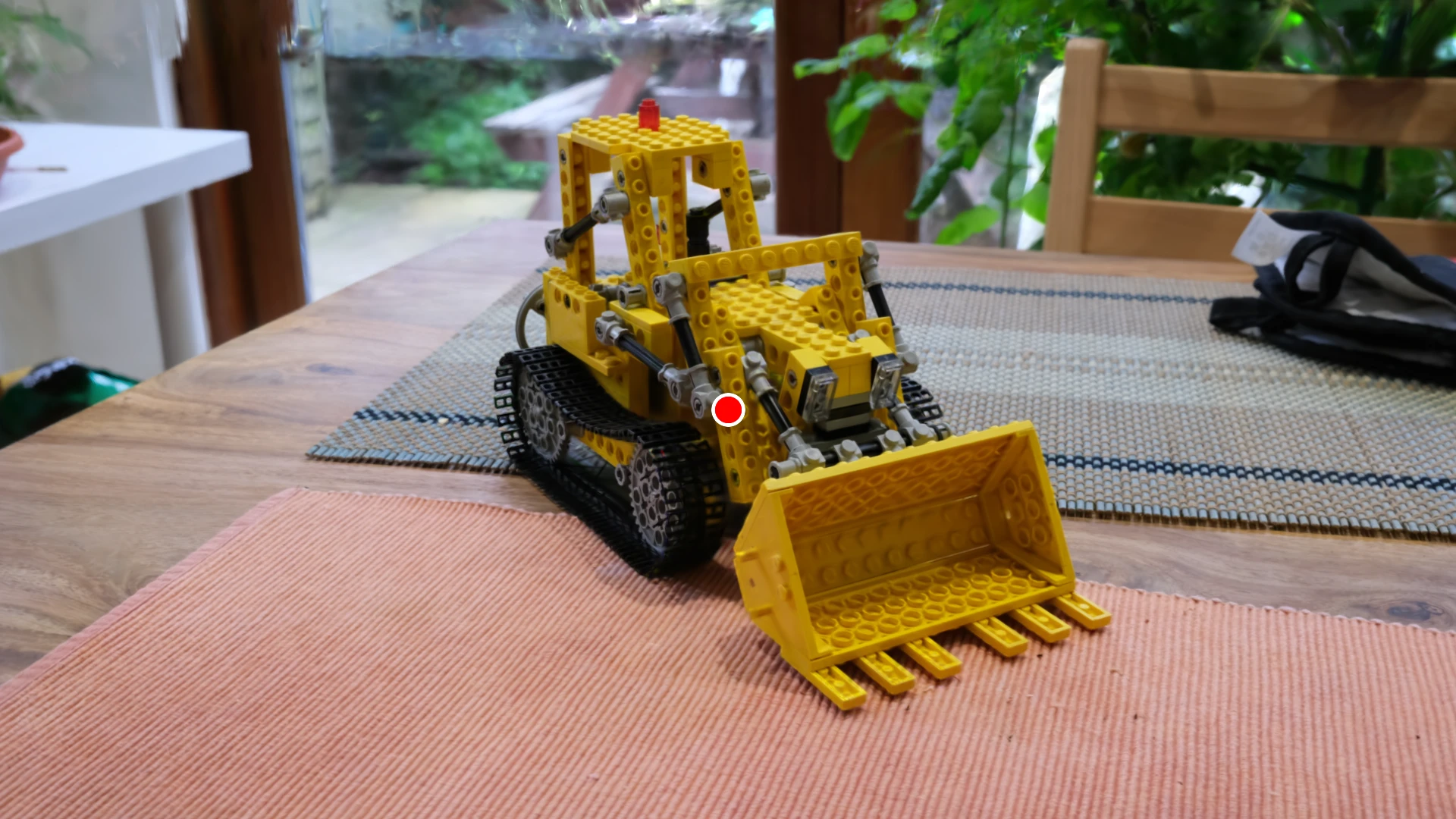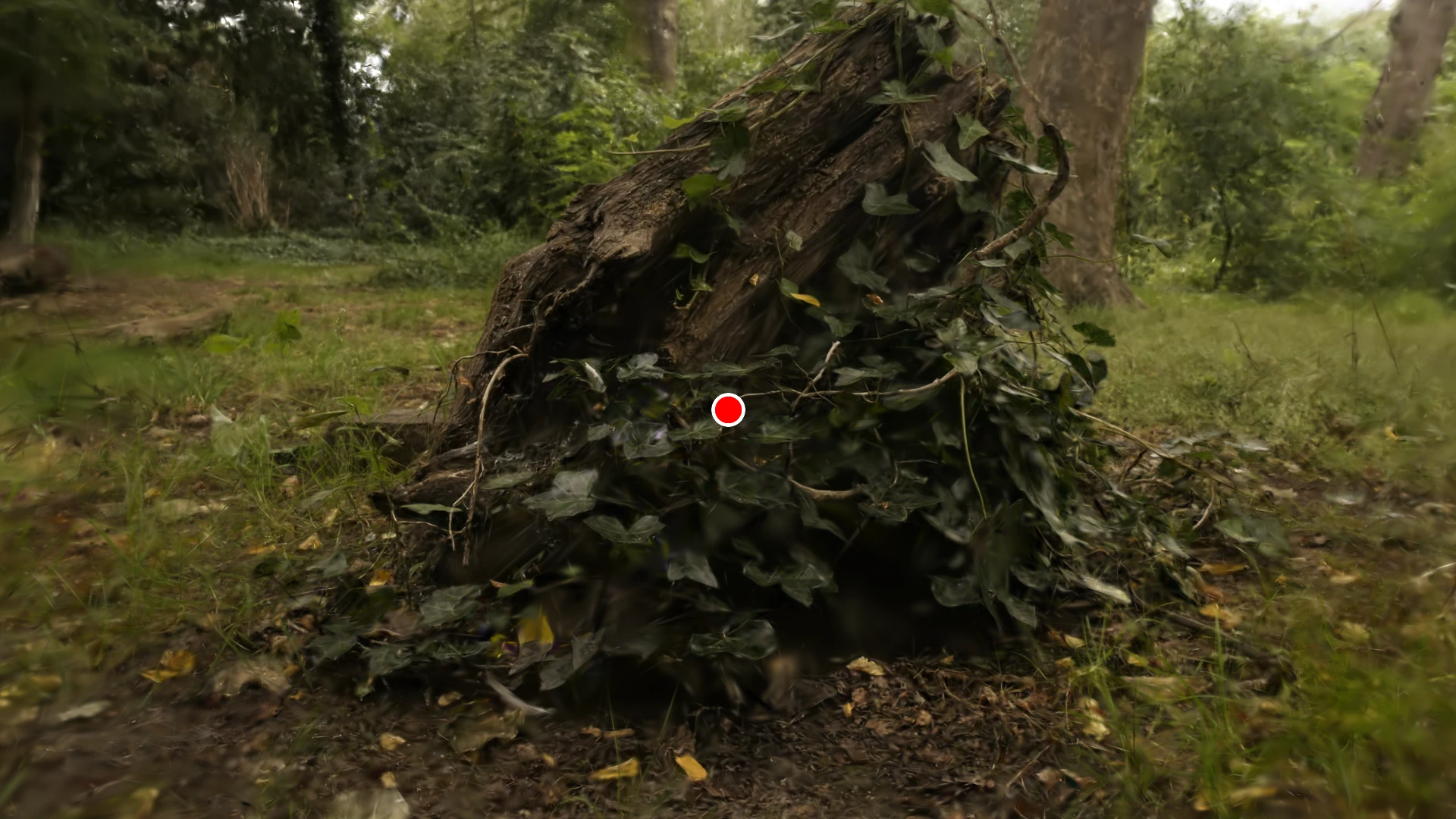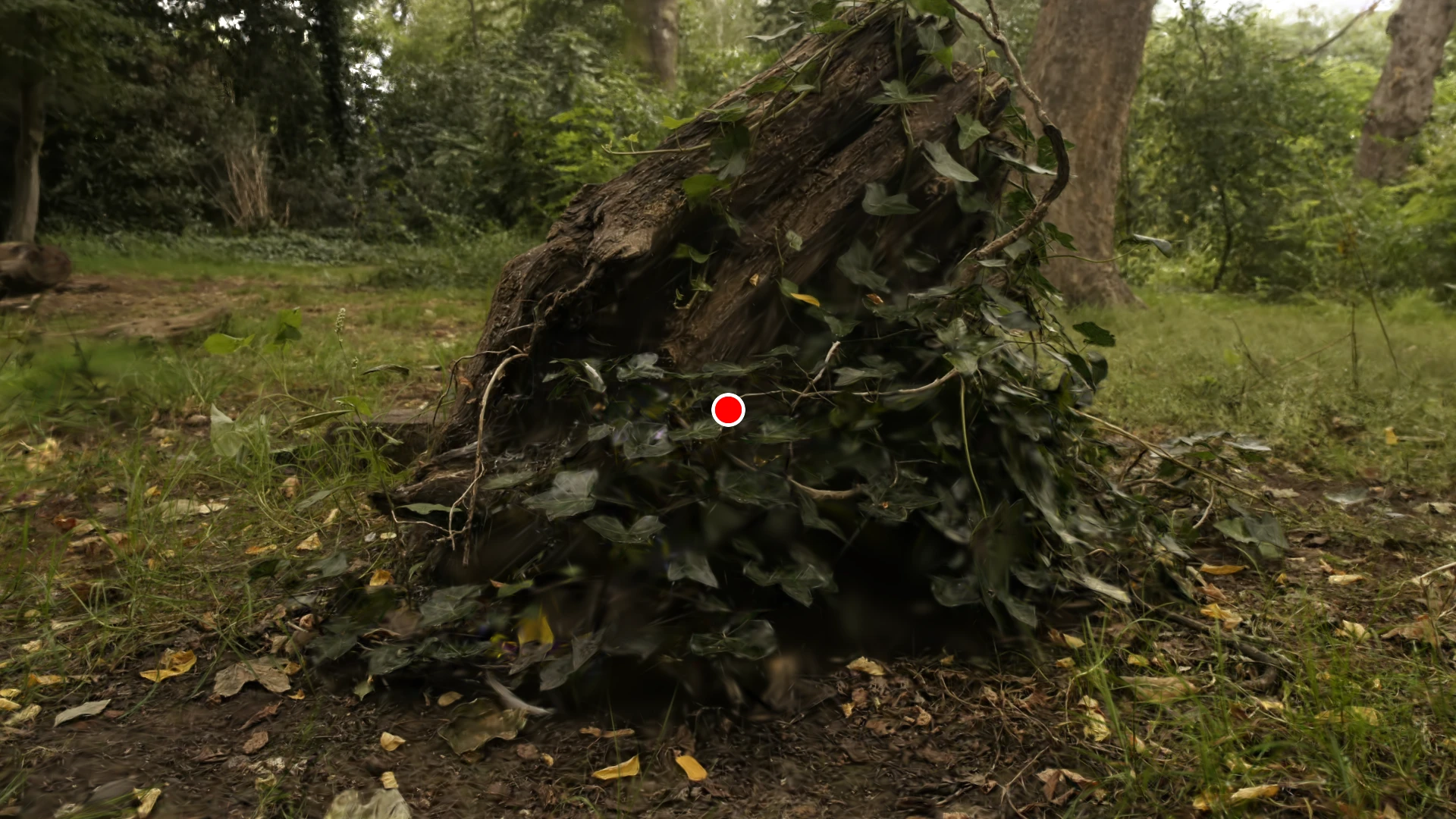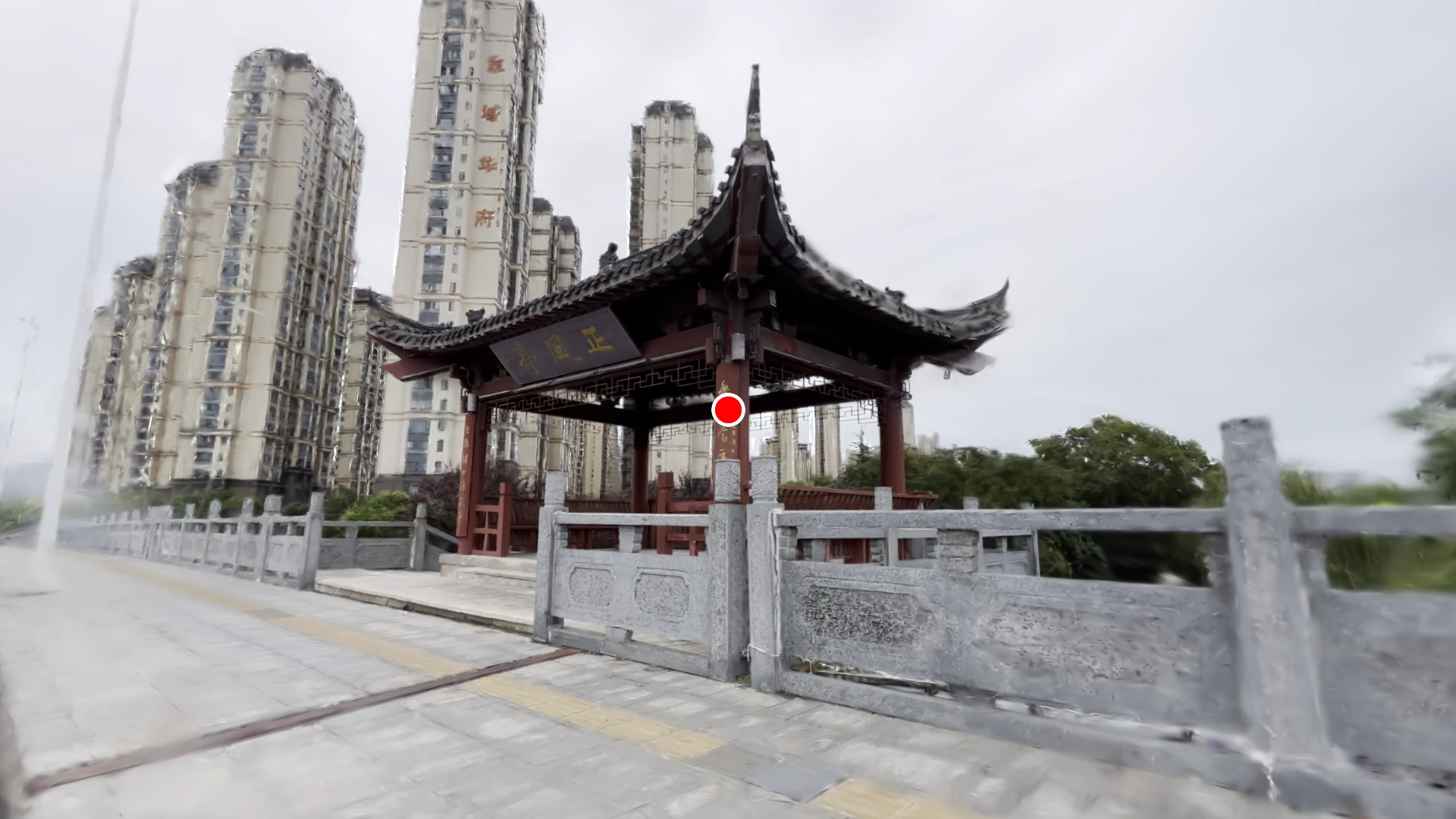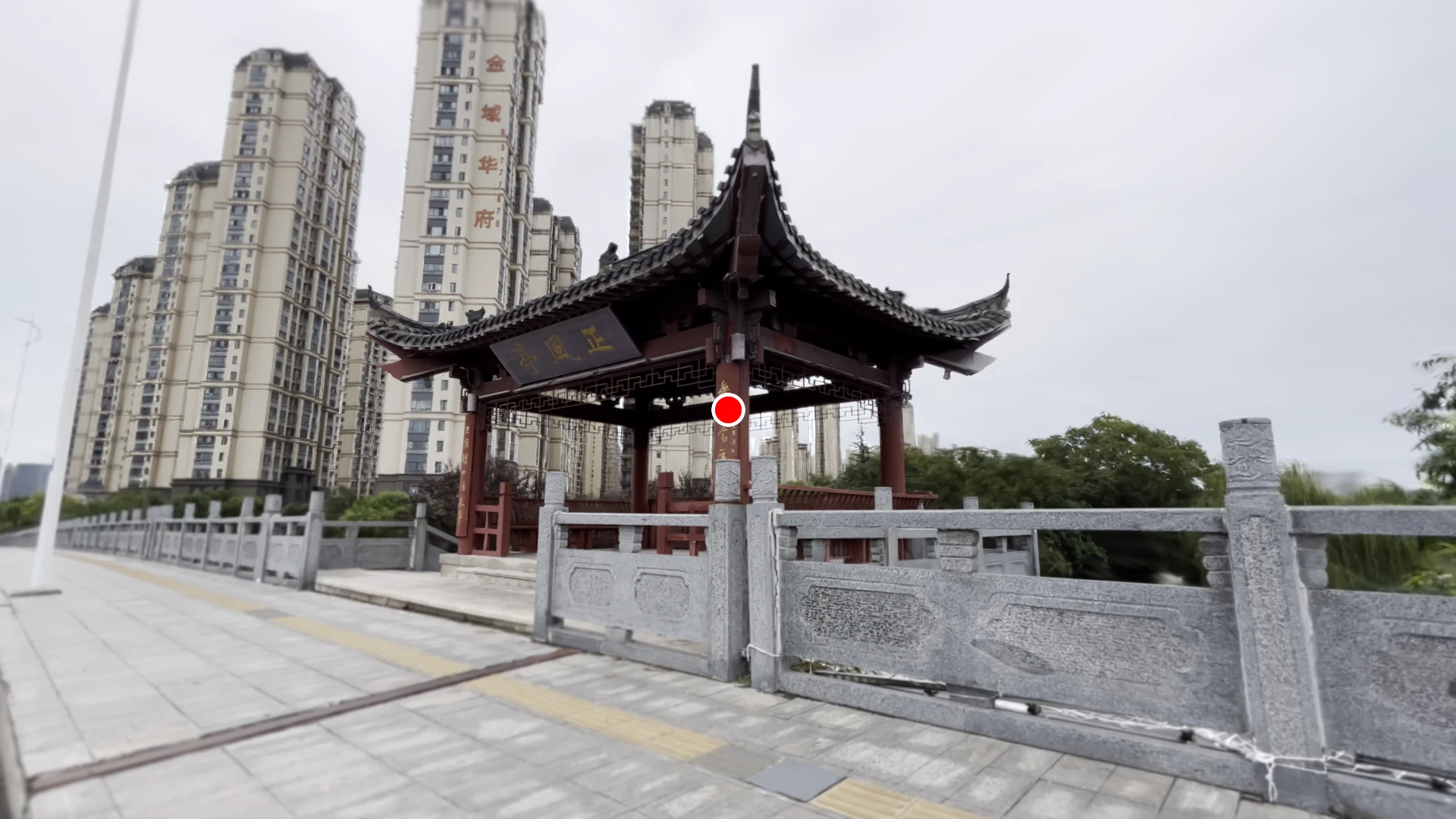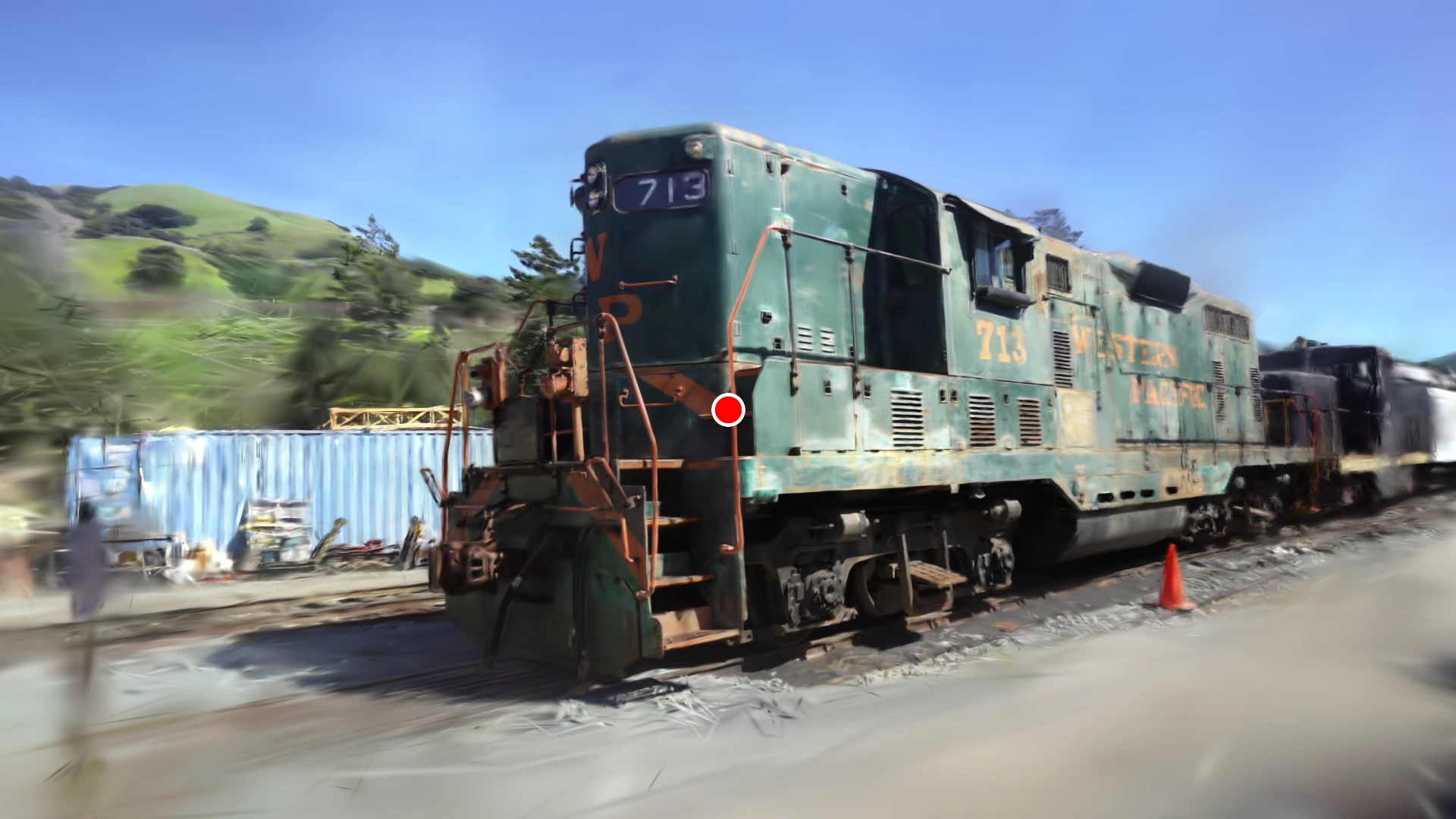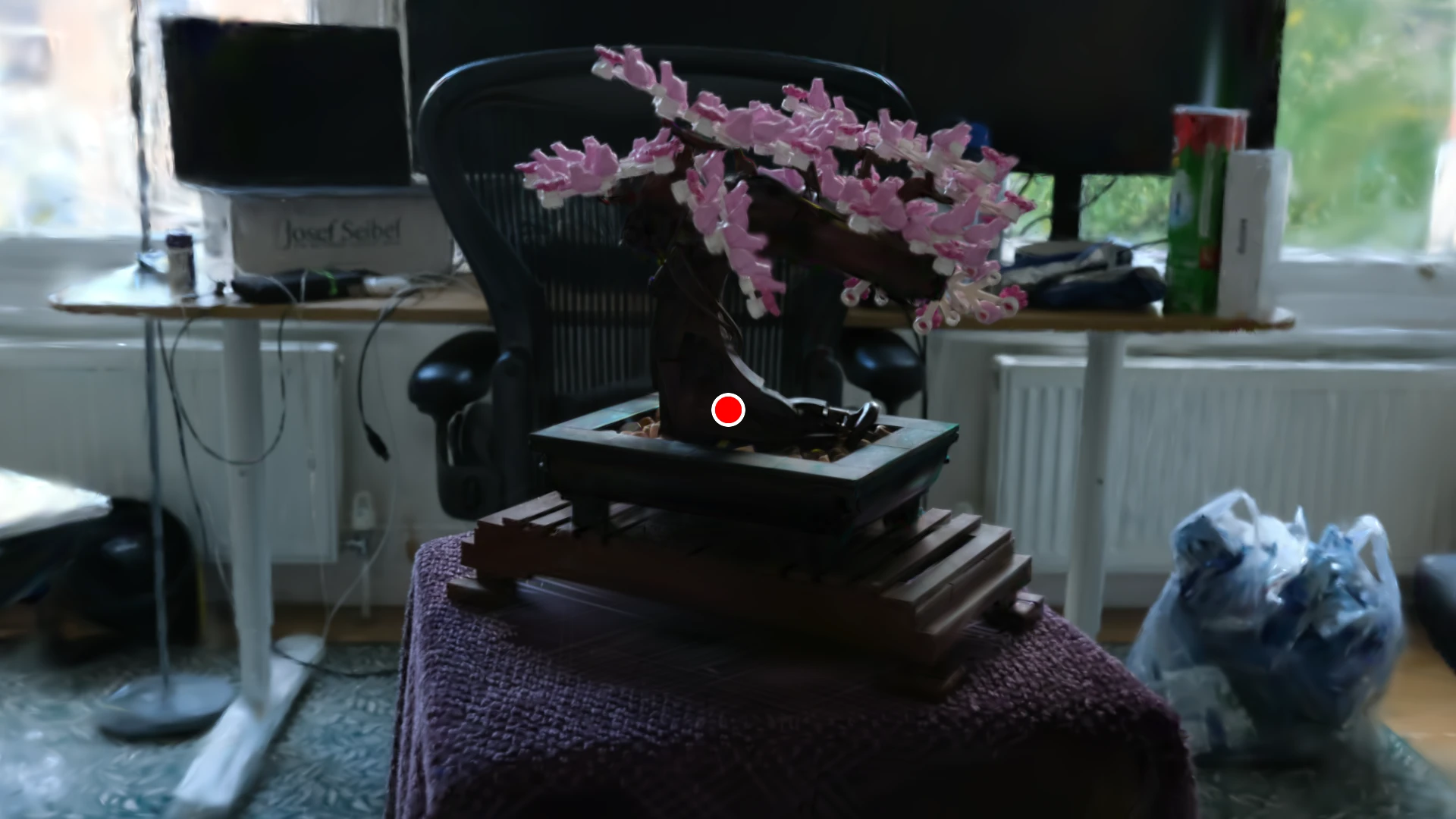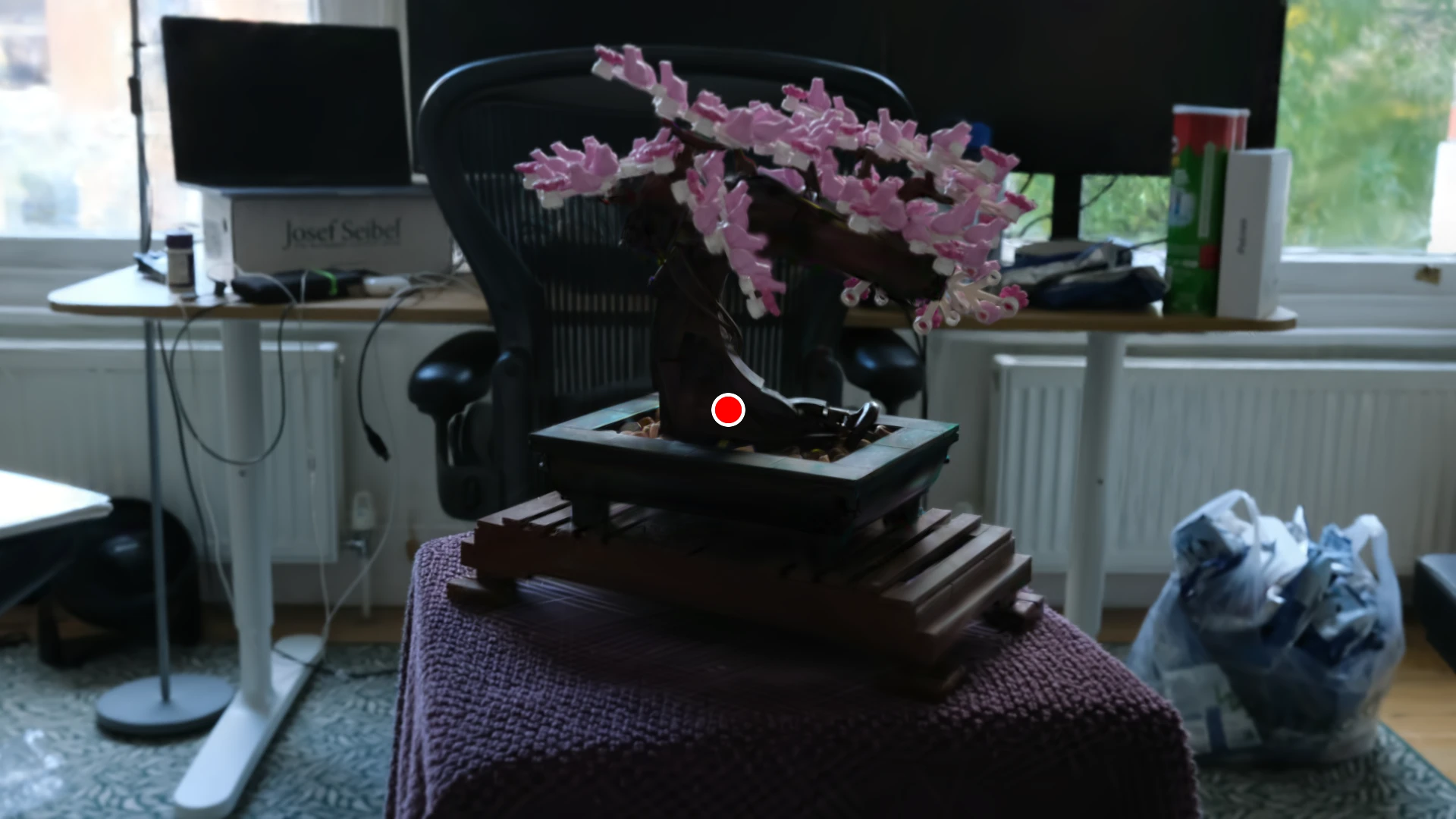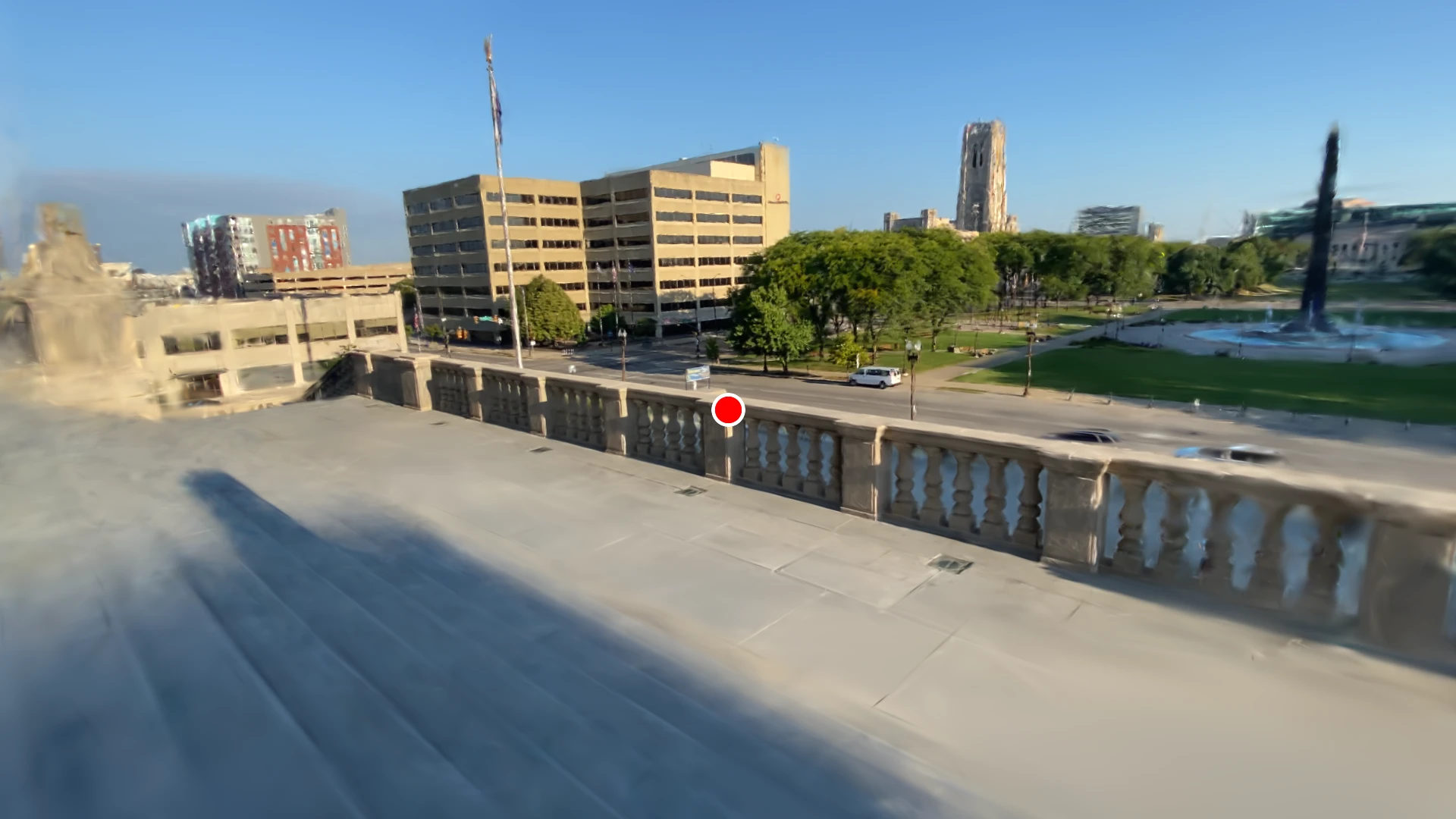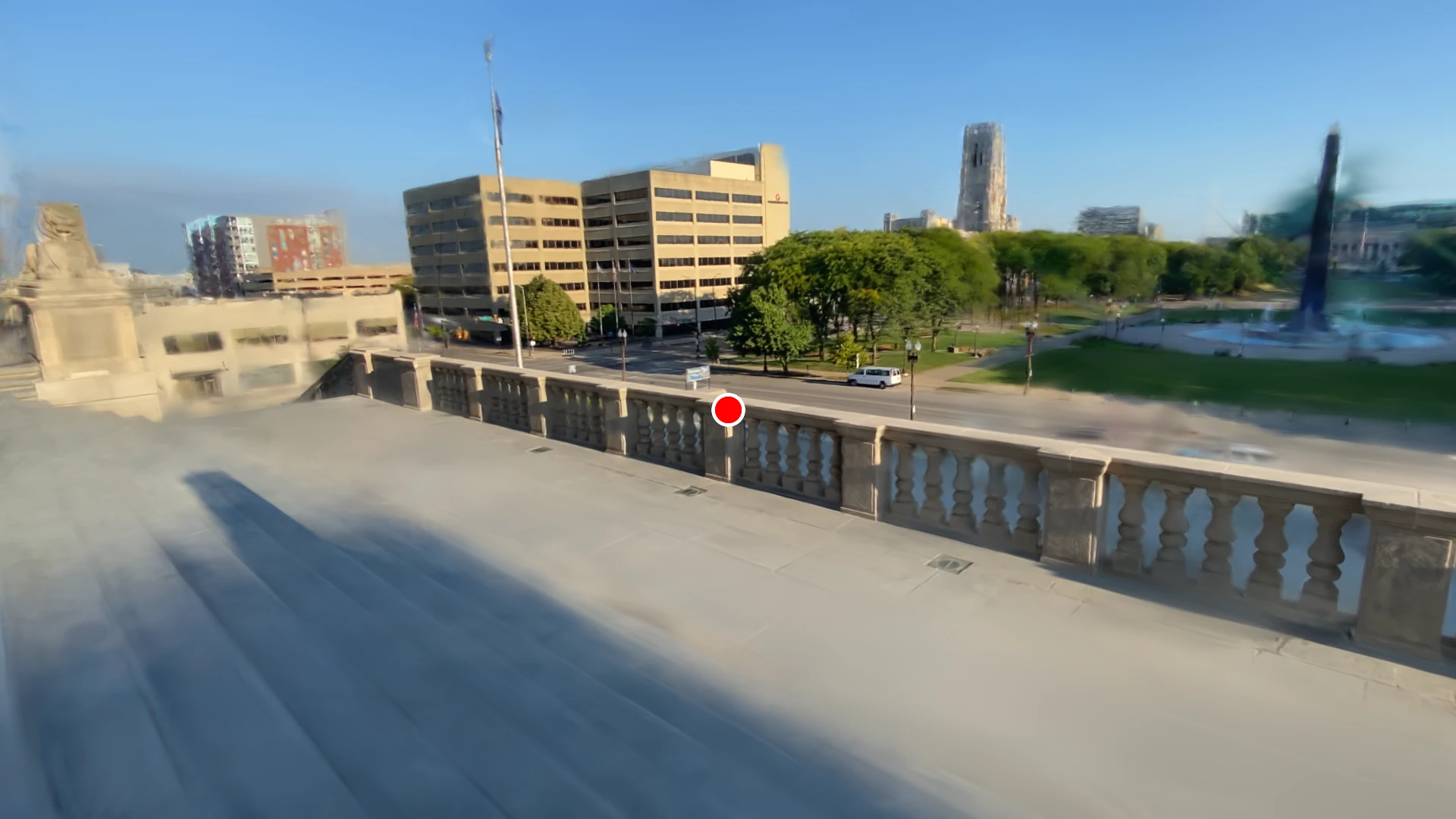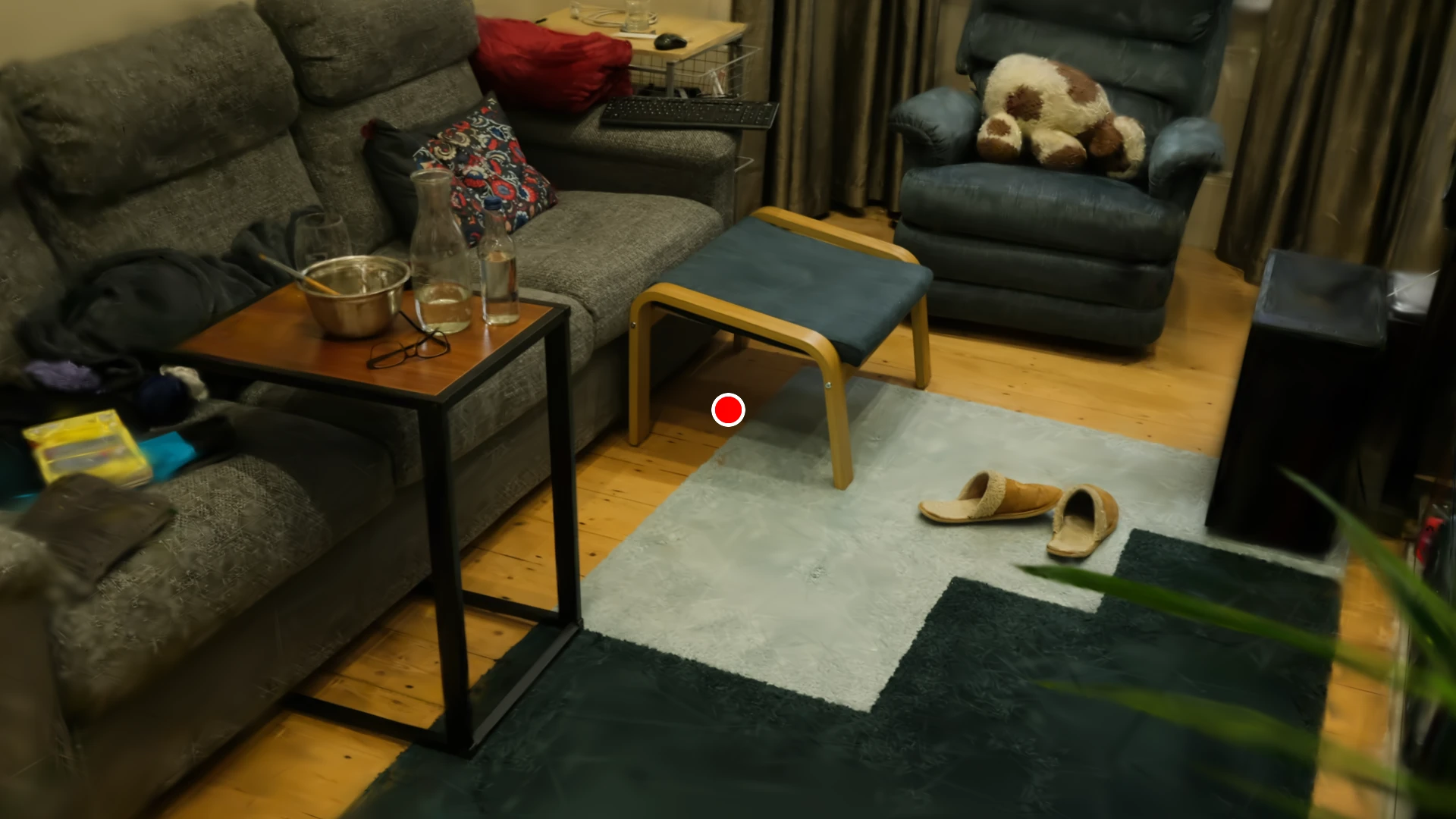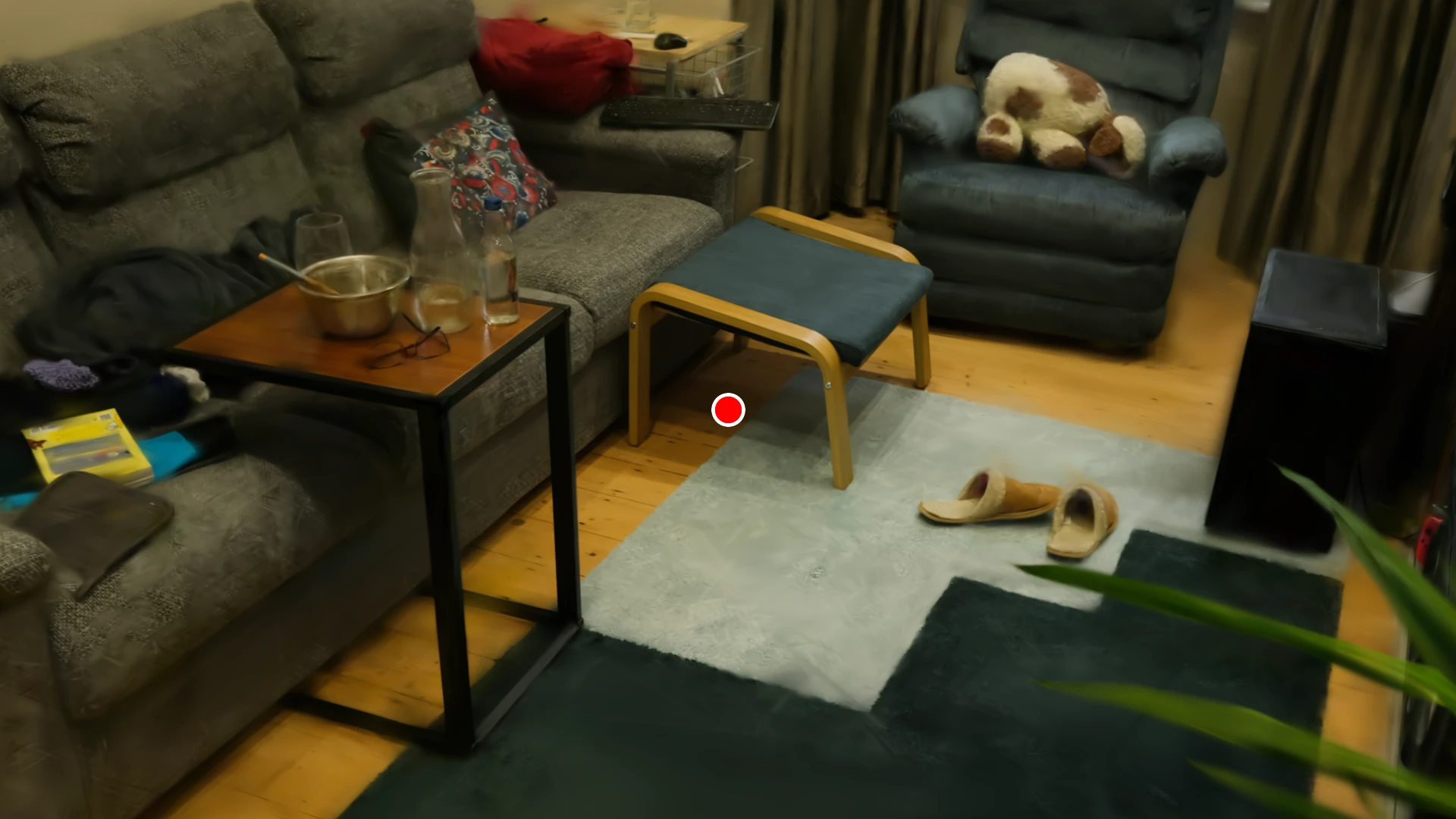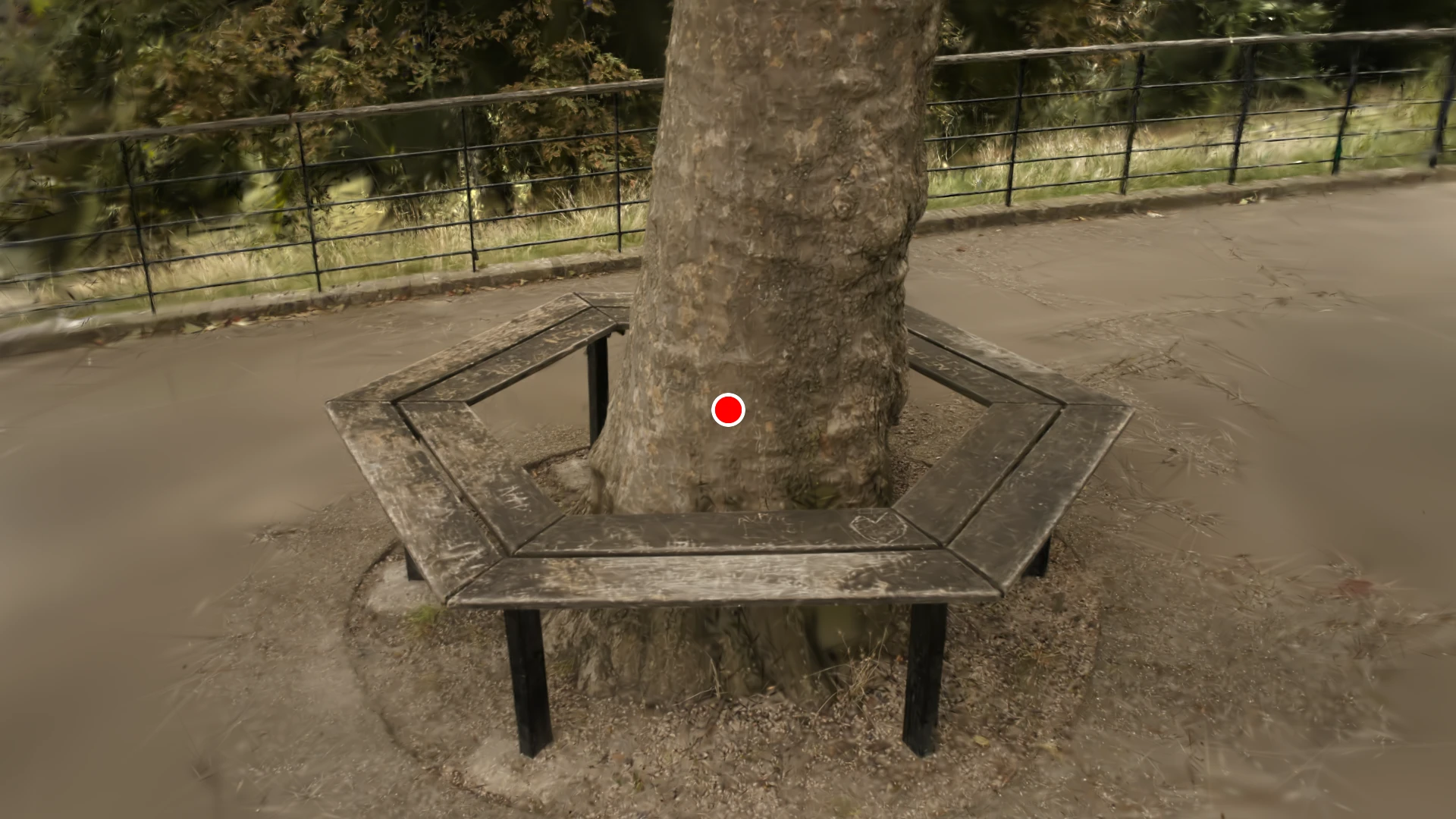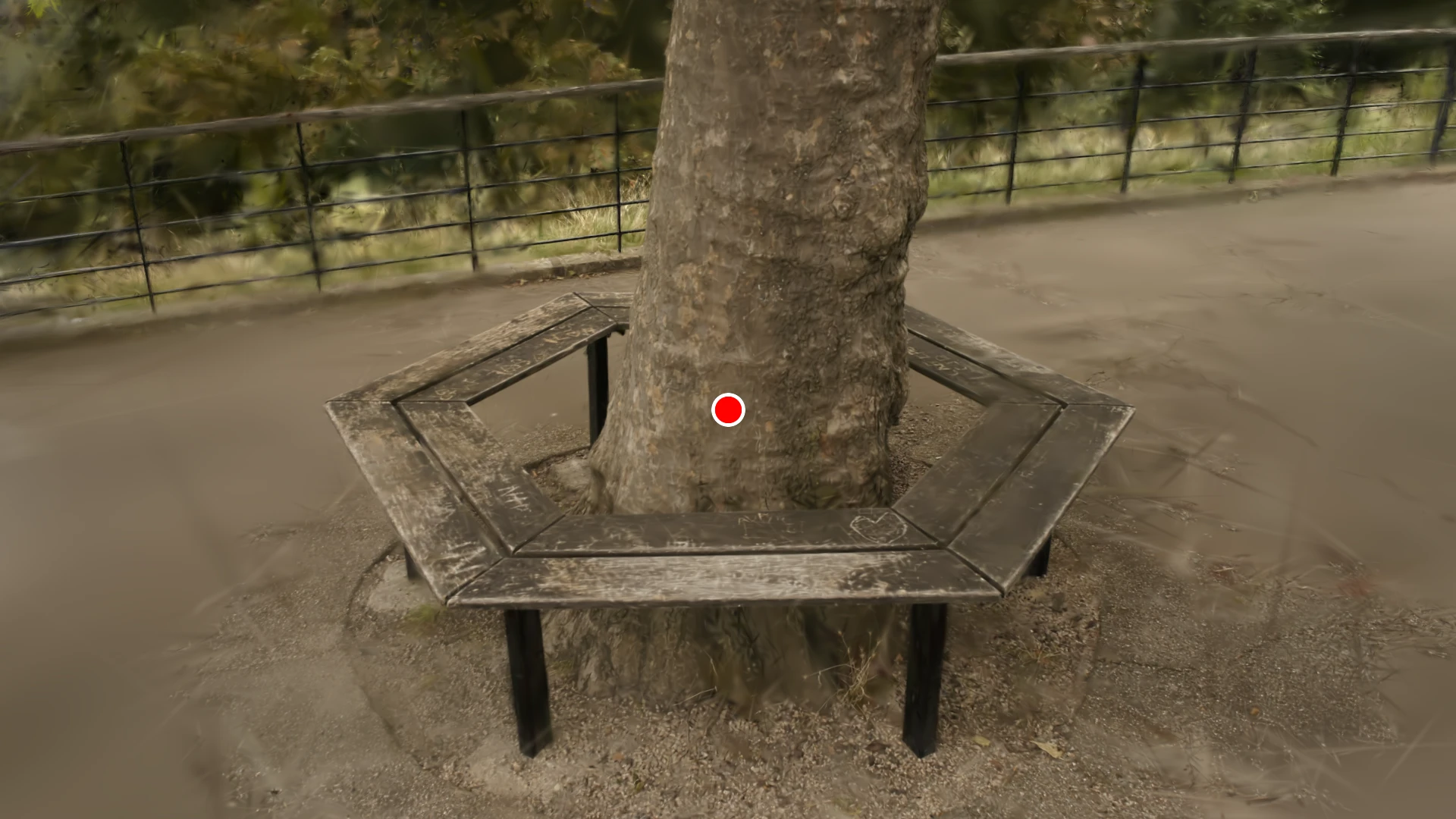
The video above demonstrate results of foveated rendering based on our object-space perceptual evaluation.
Our method assumes a viewing condition with the image center as the gaze point, a 31.5-inch monitor, and a viewing distance of 70 cm.
Blue, yellow, and red represent levels 0, 1, and 2, respectively, with rendering quality decreasing in that order.
3D Gaussian Splatting (3DGS) has recently attracted considerable attention as an efficient representation for high-quality novel-view synthesis. However, 3DGS typically relies on a large number of Gaussian primitives, making perceptually informed level-of-detail control essential for balancing visual quality and rendering efficiency.
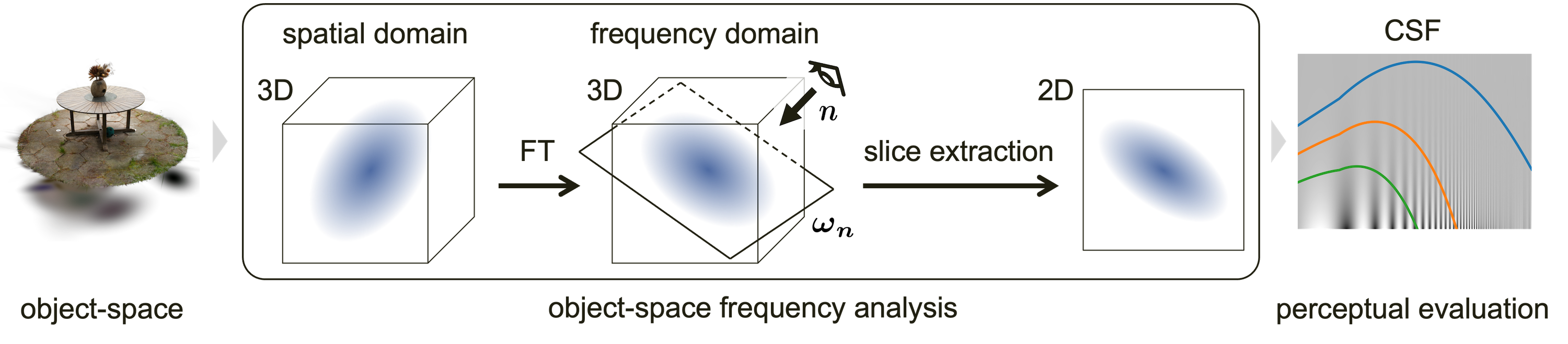
In this paper, we present an object-space analysis framework of contrast sensitivity for 3D Gaussian representations. By exploiting the analytical Fourier transform of Gaussian primitives and the projection-slice theorem, we estimate the spatial frequency response of projected Gaussians without explicit rasterization. This enables direct perceptual assessment of Gaussian primitives in object space under given viewing conditions.
As an application of this analysis, we integrate the proposed perceptual assessment into a hierarchical 3DGS representation and realize a foveated rendering scheme that selects appropriate Gaussian levels at runtime using simple comparisons. Experimental results on real-world scenes demonstrate that the proposed method preserves visual quality while reducing rendering cost compared to full-quality rendering.
Our method provides an object-space analytical framework for the perceptual evaluation of projected Gaussians without explicit pre-rendering. To achieve this, we compute the frequency response of a projected Gaussian directly from the parameters of the Gaussian in object space. First, we analytically apply the Fourier transform to a 3D Gaussian to obtain its 3D frequency response. Next, using the Projection-slice theorem, we derive the 2D frequency response of the projected Gaussian. We then compute the contrast at each spatial frequency from the obtained frequency response. Finally, by evaluating the resulting contrast based on the contrast sensitivity function (CSF), we assess the visual quality of the projected Gaussian directly in object space.

Our method construct a hierarchical representation from the input Gaussian primitives (level 0) using a greedy k-nearest neighbor clustering process.
Comparison of rendering results between our method and the reference method.
The reference method uses only level 0 Gaussians for rendering.
Our method assumes a viewing condition with the image center as the gaze point, a 31.5-inch monitor, and a viewing distance of 70 cm.
Comparison of rendering results between our object-space method and image-space blur [Tursun+19].
We conducted the experiment under a viewing condition with the image center as the gaze point, a 31.5-inch monitor, and a viewing distance of 70 cm.
Comparison of rendering results between our method and baseline method (Fov-GS [Fan+25]).
We conducted the experiment under a viewing condition with the image center as the gaze point, a 31.5-inch monitor, and a viewing distance of 70 cm.
Gaze-point movement demonstration of our method.
We conducted the experiment under a viewing condition with a 31.5-inch monitor and a viewing distance of 70 cm.
@inproceedings{yoshii2026csf3dgs,
author = {Yoshii, Naoto and Saito, Suguru and Sawayama, Masataka and Dobashi, Yoshinori},
title = {Object-Space Analysis of Local Contrast Sensitivity for Hierarchical Representations of 3D Gaussians},
year = {2026},
isbn = {9798400725548},
publisher = {Association for Computing Machinery},
address = {New York, NY, USA},
url = {https://doi.org/10.1145/3799902.3811221},
doi = {10.1145/3799902.3811221},
booktitle = {Proceedings of the Special Interest Group on Computer Graphics and Interactive Techniques Conference Conference Papers},
articleno = {172},
numpages = {10},
series = {SIGGRAPH Conference Papers '26}
}